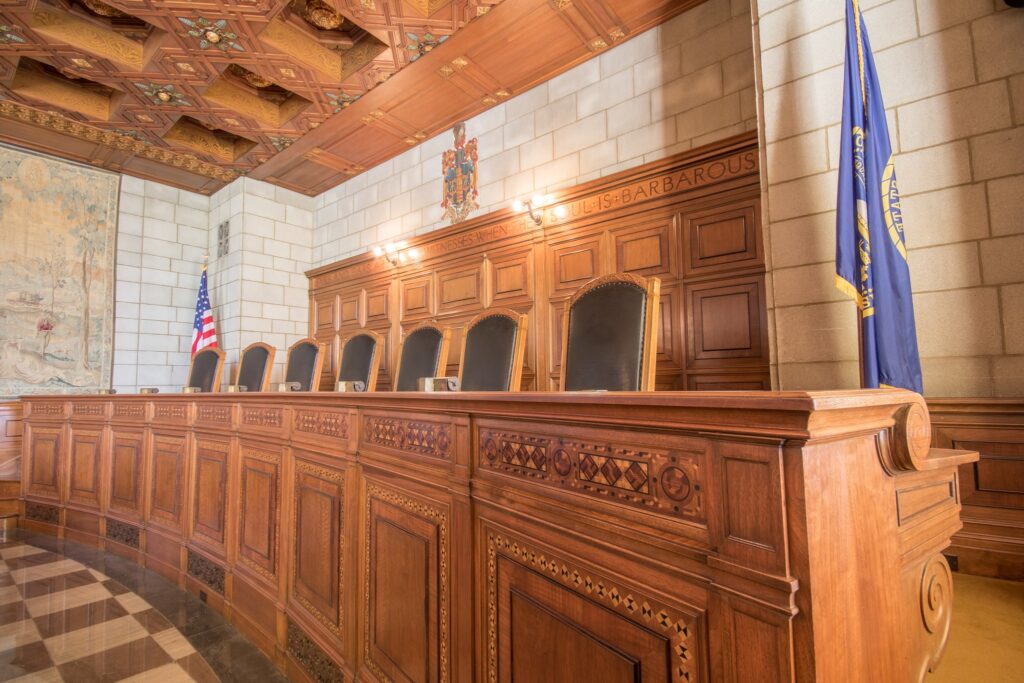
Our union and the State of Nebraska filed supplemental briefs at the Nebraska Supreme Court in our remote work/mandatory subject of bargaining case. The court ordered NAPE/AFSCME and the State of Nebraska to submit additional written briefs addressing whether Nebraska law requires the Governor to enter “impact and implementation bargaining” over remote work.
Impact and implementation bargaining occurs when an employer is not required to bargain over the substance of a topic, but must negotiate over the procedures and appropriate arrangements that stem from a change in terms of employment related to that topic during the term of a contract. You can read a copy of our supplemental brief here. A copy of the state’s brief is available here.
We have asked the Supreme Court to order the State of Nebraska to bargain over the terms and conditions of remote work assignments. If the court rules in our favor, our bargaining team will begin good faith negotiations with the Governor’s chief negotiator. A final decision from the court is likely this spring, however, the court can issue its ruling at any time.
If the Supreme Court finds that remote work is already covered by our contract and no negotiations are required, that does not mean the case is over. Our union filed grievances alleging contract violations where state agencies began implementing their remote work policies in unreasonable and arbitrary manners.
While a Supreme Court decision in our favor would render the grievances moot, we filed the grievances to protect our rights. The grievances were dismissed by the State Personnel Board while our Supreme Court case was pending, and we appealed the dismissal to the District Court of Lancaster County.
A hearing was held in the District Court before Judge Ryan Post on February 17. Judge Post will issue a decision at a later date, and asked the parties if there was any objection to waiting until the Supreme Court rules to issue a decision. The parties agreed that was acceptable, unless the Supreme Court decision lingers into the summer, in which case, Judge Post can evaluate issuing a decision prior.
Should the Supreme Court rule against us, and the District Court rules in our favor, the grievances would be remanded to the Personnel Board for a hearing on the merits. Either party could appeal the District Court decision. If the Supreme Court rules in our favor, the grievances will be moot and we will proceed with contract negotiations.
We will update our members as we receive decisions from the courts. Don’t forget to follow us on Facebook, X, and Instagram. Not a member? Join your union today.