Legislative District 2
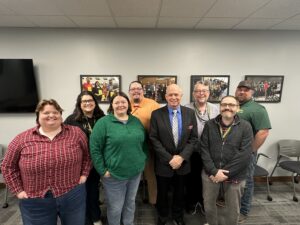
Dean Helmick
Dean served in the US Air Force for more than forty years. He lives in Plattsmouth and has served as the chairperson of the Cass County Republican Party. He has degrees in aeronautics, political science, and public administration. He also completed a fellowship at Harvard University’s School of Government.
Dean is running for Nebraska Legislature because to him, it’s all about service. He says that there are hard problems that need to be solved and he is the right candidate with the right experience to get the job done. He said that he’s always willing to listen and take our call to discuss issues important to state employees.
Dean says the most important issue facing Nebraskans today is our tax burden. He understands that all taxes are a balancing act, but we must find solutions to ensure we can grow our state.
To balance the state budget, Dean says we must control spending and regulation while keeping an eye towards the future. Dean says he has learned that we cannot cut our way, or spend our way, to prosperity. Instead we have to have strong economic development in order to grow our state.
Dean supports our right to unionize and collectively bargain the terms and conditions of our employment. His wife was a school teacher and was a member of her union. He understands the important role that a union plays during the negotiations process.
Dean sees great potential in AI use, however, he thinks that human oversight of the technology is important at all times.
Dean believes that committee chairs should be elected by public vote because truth and transparency is the best way. He supports the current filibuster rules, especially because he thinks it benefits rural Nebraskans.
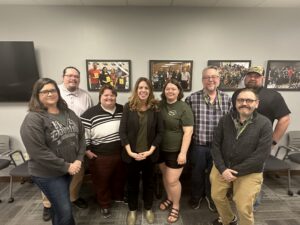 Caitlin Knutson
Caitlin grew up in her district in Lincoln and graduated from Lincoln East High School. She went on to earn a bachelors and two masters degrees and taught special education for nine years. Her husband is a Lincoln firefighter.
Caitlin is running for the Nebraska Legislature because she thinks the current Unicameral does not have a vision for the future. She thinks we must have a long term plan in order to make sure government can efficiently and effectively serve Nebraskans.
Caitlin thinks the most important issue facing Nebraskans today is our state budget deficit. She feels that the current budget shortfall will lead to a reduction in vital services all because of a lack of planning by the legislature.
Caitlin thinks that in order to balance the budget, we need all hands on deck to develop a plan. First, she feels that we have to pause corporate tax cuts in order to stop the revenue bleeding. From there, Caitlin says the budget should be treated like a household budget. She would get input from stakeholders, including frontline employees, to determine how best to find efficiencies in state government.
Caitlin strongly supports the right of state employees to unionize and collectively bargain. As a former member of the Omaha Education Association and with her husband a member of the Lincoln Firefighter’s union, she knows firsthand how important collective bargaining is in making sure the working class has a voice on the job.
Caitlin believes that AI use should have guardrails and that human oversight is necessary in decision making.
Caitlin does not have a strong opinion on how the legislature should elect its committee chairs, but leans towards keeping the secret ballot, and she needs to learn more about the current filibuster rules before taking a position on any potential changes.
Legislative District 4
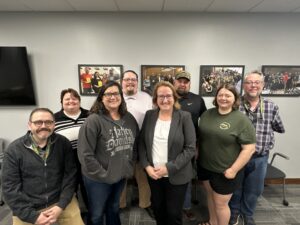 Cindy Maxwell-Ostdiek
Cindy is a thirty-year Omaha resident, lifelong independent, and has a background in human resources and recruiting.
She is running for legislature because she believes that the Nebraska legislature hasn’t lived up to its coequal status as a branch of government. She was encouraged by others to run, and she believes our elected officials must work together in a non-adversarial manner to help Nebraska grow.
Cindy believes the most important issue facing Nebraskans today is ensuring that our elected leaders follow the rule of law. She is upset that the legislature has taken action to undo voter actions at the ballot box.
Cindy strongly supports the right of public employees to unionize and has seen first hand how having a union contract has helped her family members.
In order to balance the state budget, Cindy believes that we must expand our revenue base without regressive taxation on working class families. Cindy said that nobody wants to pay taxes, but the fiscal notes on income tax cuts was clear that we would be in the situation we are currently in, and she doesn’t feel that is responsible.
Cindy believes that we can better attract and retain state employees by learning why people leave, have competitive pay, ensure a quality work environment, and expand flexibility like remote work assignments where appropriate. Cindy also believes that AI use must have human oversight and not displace workers.
Cindy believes that committee chairs in the legislature should continue to be elected by secret ballot and the current filibuster rules should remain.
Senator Brad Vongillern
Senator Brad von Gillern currently represents LD4 in the Nebraska Legislature and serves as Chair of the Revenue Committee. Prior to being elected to the Legislature, Senator von Gillern was in the construction business. While operating his construction company, he led reforms within the company to ensure a culture of safety.
Senator von Gillern is running for re-election because he believes that he has been an effective State Senator. He has filed over 60 bills in his four years in the legislature, and the majority of them have passed. He says he is passionate about growing our state and will work hard on behalf of his fellow Nebraskans.
Senator von Gillern believes the most important issue facing Nebraskans today is affordability and the cost of living, followed closely by high property taxes.
Senator von Gillern supports the right of public employees to unionize and collectively bargain. He believes employees should have the right to choose whether or not to form and join a union. In the past he has worked closely with the Omaha Police Officer’s Association.
Serving as Chair of the Revenue Committee, Senator von Gillern says it’s a delicate balance in order to balance the state budget. He does not believe the answer is more taxes, but instead controlling state spending.
Senator von Gillern does not see AI as a panacea to more efficiency. He would want to see more details, but generally believes in human oversight of AI.
Senator von Gillern believes in electing committee chairs in the legislature by secret ballot, and would like to see the filibuster threshold changed to 30 votes.
Legislative District 6
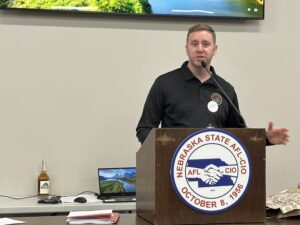 Patrick Leahy
Patrick was born and raised in Omaha and lives there with his wife and three children. He serves as the CEO of a recycling company and previously worked for Senator Ben Nelson traveling with him as an aide. He has a passion for sustainability, and he has served on the NRD board. Patrick says he has the right kind of experience to serve in the legislature.
Patrick is running for legislature to tackle kitchen table issues that matter to people in his district including delivering affordable childcare, lowering property taxes, and growing our state to tackle the workforce shortage. He feels that these are the most important issues facing Nebraskans today.
Patrick supports the right of state employees to collectively bargain contracts because we must have labor in order to have capital. He looks forward to working with Omaha area unions like the IAFF, IBEW, Carpenters and FOP to protect the rights of working people.
Patrick believes that we must grow our economy in order to balance the state budget. He says it’s important that we make Nebraska attractive to young people and stop “brain drain.”
Patrick believes AI will be a defining issue of our time, and believes that there should be human oversight of all AI in the delivery of public services.
Patrick stated that he is very cautious about changing long standing legislative rules and for that reason supports the current process for selecting committee chairs and the filibuster.
 Nate Ostdiek
Nate has lived in Omaha his whole life. He is currently working on his master’s degree at the University of Nebraska-Omaha. He says he may not be the typical candidate for legislature, but he is committed to building the strongest coalition to better our state.
Nate is running for legislature because he hopes to make a difference in the lives of his neighbors. He knocked doors for candidates in 2022, and he found that candidates weren’t talking about the most important issue – the rising cost of living.
Nate still feels that the rising cost of living is the most important issue facing Nebraskans today. He wants to work with unions to help give the working class a voice. He feels that state services are the backbone of making our state function. He said, “Nebraska is not a business, it’s a place where people live.”
Nate said he is “ten toes down” to support our union and state employees’ right to collectively bargain contracts. He said the ability to organize and secure good wages is the backbone of a strong society.
Nate feels that the current state budget crisis has come from too many specialized tax exemptions without transparency or reporting requirements. He believes that the legislature should act to balance the budget instead of deferring to the executive branch.
Nate believes that AI could be used to cut costs and replace human interaction, which is why he supports required human oversight in the delivery of state services.
Nate believes that committee chairs in the legislature should continue to be elected by secret ballot and the current filibuster rules should remain.
Legislative District 8
Erin Feichtinger
Erin was born and raised in Omaha. After graduating from Marian High School, she attended college at Loyola University in Chicago where she earned her undergraduate and PhD.
Erin is the policy director for the Women’s Fund of Omaha and has spent years getting Nebraskans involved in the legislative process. Policy work is her “great love” and worked on issues such as the paid sick leave initiative. She is running for legislature to help Nebraska build an economy that works for everyone.
Erin says that she unequivocally supports the right of state employees to collectively bargain and said that she “will never waiver on that, and you always have an ally in me.”
Erin is not supportive of cutting vital state services to balance the state budget. She feels that the work state employees do is a credit to the America we have built together. In order to balance the state budget, Erin believes we need responsible tax policy to support essential services.
Erin knows how the legislature works and she respects the institution. She believes the current procedures for the selection of committee chairs and filibuster rules should remain unchanged.
 Josh Livingston
Josh lives in the Dundee neighborhood in Omaha. He graduated from Creighton law school and is a family law attorney. He serves as the President of the Nebraska Association of Child Support Attorneys.
Josh is running for legislature because he believes that we should find middle ground to always keep our state moving forward.
Josh believes that the most important issue facing Nebraska today is our state budget crisis. Josh does not believe in sweeping cash funds, and said that we can’t simply slash and cut funds. In the long term that is not a successful strategy.
Josh supports the right of state employees to unionize and collectively bargain. Josh believes the right to stand up for ourselves as employees is most important.
AI is a concern for Josh. He has seen lawyers use AI inappropriately with ghost citations. He believes AI needs regulation and human oversight.
Josh believes committee chairs should be elected by a public vote because, “democracy dies in the dark.” He supports the current filibuster rules and would not propose changes to that rule.
Legislative District 10
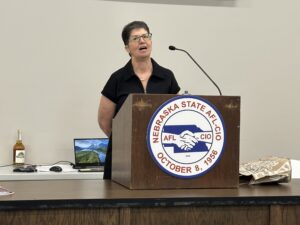 Cindy Johnson
Cindy is an audiologist. She went to Wayne State College on Pell Grants, and now practices in Omaha. She comes from a union family with members who are firefighters and steamfitters.
Cindy is running for legislature to be a strong voice to lower the cost of living and support public schools. Cindy lived in Madison, Nebraska when Tyson bought Hormel and the plant closed causing the layoff of many union members. She wants to work to prevent situations like that.
Cindy believes the most important issue facing Nebraskans today is affordability. Things are getting more expensive and she sees political fighting instead of solutions. That has motivated her to run.
Cindy supports the right of state employees to unionize and collectively bargain our wages and working conditions.
Cindy sees the state budget like a home budget. She believes the legislature needs to go line by line and use money efficiently. She does not believe cutting wages or furloughing state employees is an effective method to balance the budget.
Cindy stated that AI should not displace workers or public services. She believes AI is a tool, but it needs human oversight and to be used responsibly.
Cindy believes that committee chairs should be elected by secret ballot because there is too much partisanship currently in the legislature. She believes the current filibuster rules should not be changed.
Cindy earned the endorsement of our union because of her commitment to advocate for the values contained in our legislative priorities.
Rebecca Rens
Rebecca Rens did not respond to our invitation to be interviewed.
Legislative District 12
 Christy Knorr
Christy is a hospice nurse who describes herself as an “everyday Nebraskan.” She is running for legislature because she sees disrespect on both sides in the current Nebraska legislature. It has been a long time since a nurse has been a state senator, and she wants to help amplify voices.
Christy’s dad was a union member and her mom was an immigrant. Christy decided to go to nursing school because of a CFS caseworker who encouraged her to do so. She was the first college graduate in her family, and her children were the first kids in her family to graduate high school. Christy knows what it’s like to be on welfare, which would be a unique voice in the legislature.
Christy believes the most important issue facing Nebraskans today is affordability. Additionally, Christy believes that the legislature must address property taxes and provide “real” relief for property owners.
Christy “absolutely” believes in the right of state employees to unionize and collectively bargain the terms and conditions of their employment.
Christy believes that the current state budget deficit can be solved, and property tax relief can be provided, by medical marijuana tax revenue. She also believes marijuana tax revenue could provide free school lunches.
Christy believes that AI must be regulated. She stated that she has been very intentional in her campaign to make sure that she does not use AI.
Christy believes that committee chairs should be elected in open and transparent elections via public vote. She also believes that the current filibuster rules should remain in place.
Senator Merv Riepe
Senator Riepe did not respond to our invitation to be interviewed.
Legislative District 14
 Bill Bowes
Bill Bowes is a 61 year Nebraska resident. He grew up in Omaha and became a teacher. After having kids, he knew he needed a higher paying job, and he became a firefighter. He spent 21 years as a union firefighter and then became the Fire Chief in Papillion for 17 years.
He retired in 2023 and is now running for legislature to continue his lifelong public service. He said he is uniquely positioned to be successful with his experience in city government as a frontline worker and a manager. He believes it is important for our government to ensure a high quality of life through things like good streets, arts, and recreation programming.
Bill believes the most important issue facing Nebraskans today is property taxes. He said property taxes should be a local issue, but understand the importance of providing relief.
Bill believes the current state budget deficit is partly because of a spending problem, but the way out of that is to grow our state. He believes we need business incentives in order to compete, especially with our neighboring states. He stated long term solutions are needed, and he likes consumption and use taxes, but not a blanket consumption tax like EPIC.
Bill supports the right of state employees to unionize and collectively bargain and said he would never do anything to harm our right to collectively bargain.
Bill believes AI should be regulated, but he isn’t sure right now how best to do it. He believes that a human element is required.
Bill believes that committee chairs in the legislature should be elected by public vote. He believes in the current filibuster rules, because it allows all voices to be heard.
 SuAnn Witt
SuAnn became a secretary at Omaha Public Schools shortly after graduating from Omaha South High School. Over her 37 year career at OPS, she was promoted from secretary all the way to IT manager. After retiring from OPS, she went on to work at the Nebraska Department of Education for 13 years. She was elected to the Papillion LaVista Board of Education.
SuAnn is running for the legislature to get rid of party politics and to be a voice that consistently works for the people of Nebraska. She was a union member when she worked at OPS, and she has been a part of the school board negotiations team while serving on the school board. Her philosophy is to have a responsible budget while also investing to attract and retain staff.
SuAnn believes that the most important issues facing Nebraska today are high property taxes and the legislature not honoring the voice of the people. She is upset that current State Senators have overturned referanda supported by the voters.
SuAnn believes that the current state budget deficit should be solved with permanent and long term solutions. She has vast experience with the state budget and contracting from her time at NDE. She believes the first priority should be paying frontline staff and contracted providers, and then work to balance the budget from there. She believes fund sweeps are problematic, and not a real way to balance the budget.
SuAnn believes in the right of state employees to unionize and collectively bargain. She stated, “I will have your back always.”
SuAnn believes there is a place in the world for AI, but that AI needs to be monitored and managed. She said AI could replace jobs, and it’s important we have human oversight of the technology.
SuAnn has no problem electing committee chairs by public vote, however, she believes the Unicameral must elect the best person for the job and that may best be done by secret ballot. She believes that the current filibuster rules should remain the same.
Legislative District 16
Legislative District 18
 Jess Goldoni
Jess Goldoni is a small business owner with a background in marketing and communication who works in finance and technology focusing on AI education. Her husband works for the City of Omaha and is a member of AFSCME Local 251.
Jess is running for Nebraska legislature because she has been frustrated as a voter watching things not get done that actually affect our pocket book and our lives. She feels there needs to be more of a problem solving approach and wants to work to get things done across the aisle. Jess said, “I’ve never met a problem I couldn’t solve even with people I disagree with.”
Jess says the most important issue facing Nebraska today is the lack of focus on the working class. She says we must focus on lowering costs and making Nebraska a hub for innovation and a place that businesses want to invest in.
Jess 100% supports collective bargaining and is proud to be married to an AFSCME member.
Regarding the state budget, Jess feels that the legislature is playing a shell game by sweeping cash funds and thinks the current legislature is kicking the can down the road for a future legislature to solve. Jess thinks we need to broaden the tax base in order to generate revenue to balance the budget.
Jess is an expert on AI, and she wants to lead the charge in writing policies to ensure that AI is regulated. She believes the workforce needs to be “upskilled” and trained in how to use AI as a tool so that new jobs can replace old jobs that are no longer needed. She believes that a human must have oversight of AI 100% of the time.
Jess thinks that committee chairs should be elected by public vote in order to increase transparency in the legislature. She thinks the filibuster is important due to our Unicameral system and does not think the rules should change.
Taylor Royal
Taylor was born in Nebraska and is a CPA and financial advisor. He loves to research and investigate problems to find solutions that benefit everyone. Taylor is running for the legislature because he wants to bring a new generation of leadership to Lincoln to grow our state to prosperity. Taylor wants to listen to all voices and surround himself with frontline workers to understand issues. He stated that public employees are often overscrutinized and underappreciated.
Taylor feels the most important issue facing Nebraskans today is affordability. He stated that rising costs are pushing seniors out and making it difficult to keep young people in state. He stated that he wants to grow Nebraska so that his children will stay for life.
Taylor supports the right of state employees to unionize and collective bargain, and stated that he feels it’s an important right to keep.
Taylor sees the state budget as a pie, and in order to fix the current budget, we “need less cuts and more pie.” He feels we need strong incentives to help businesses grow, which in turn would create more revenue and jobs for Nebraskans.
Taylor says that he is still learning about how AI will affect us in the future, but he thinks it’s important for there to be human oversight in the use of AI, especially in the delivery of state services.
Taylor says he has no strong feelings about whether committee chairs in the legislature are elected by public vote or secret ballot. He supports the current filibuster rules.
Legislative District 20
Chris Anderson
Chris retired in June 2025 and is a US Air Force Reservist and proud father. He has considered running for the legislature for a couple of years, and after praying on it, decided to run.
With a 31 year background in government and private sector, Chris feels that he is uniquely qualified to find common ground to help our government run as efficiently as possible.
Chris feels the most important issue facing Nebraskans today is our tax burden, especially our property tax burden. Chris thinks that in order to prevent losing Nebraskans to out migration, we have to lower our property taxes.
Chris supports the right of state employees to unionize and collectively bargain the terms and conditions of their employment.
In order to balance the state budget, Chris thinks it is most important to grow our state. He wants to listen to all stake holders, including our union members, to develop a plan to market Nebraska. Chris would also like to embolden the state auditor to do more to root out waste.
Chris feels that we need to leverage AI to help keep us safe and create new jobs. He unconditionally believes that AI should have human oversight at all times.
Chris believes in transparency and that committee chairs in the legislature should be elected by public vote. Chris wants to become more educated on the filibuster rules in the Unicameral. He believes we should eliminate rules that cause inefficiencies.
 John Fredrickson
Senator Fredrickson is a mental health professional from Omaha. A graduate of Skutt Catholic High School, Senator Fredrickson earned a bachelor’s in social work from New York University and a master’s degree from Columbia University.
Senator Fredrickson serves on the legislature’s Health & Human Services Committee and has been a strong ally for state employees. He supports our right to unionize and collectively bargain, he introduced legislation to protect workers, fought against efforts to weaken rights of gig workers, and fought to protect the transfer of youth between the YRTCs that would have not only harmed youth, but led to the layoff of our members.
Because of his strong voting record in the Unicameral, Senator Fredrickson has earned our endorsement for re-election.
Legislative District 22
Legislative District 24
 Senator Jana Hughes
Senator Jana Hughes currently represents LD24 in the Nebraska Legislature. She grew up on a farm near Goehner and graduated from Texas A & M University with a degree in Industrial Engineering. Senator Hughes previously served on the Seward School Board and has dedicated time in the Unicameral to find solutions to improve school funding and making it more difficult for youth to become addicted to vaping and other nicotine products.
Senator Hughes is running for re-election in hopes of making positive changes for all Nebraskans, especially regarding school funding. Senator Hughes stated she’s learned that nothing is black and white in the legislature, and she is committed to listening to everyone in order to find solutions that benefit Nebraskans.
Senator Hughes feels the most important issue facing Nebraskans today is the rising cost of living. She wants to work to lower taxes while ensuring that services, especially our schools, are funded.
Senator Hughes supports the right of state employees to unionize and collectively bargain the terms and conditions of our employment. When Senator Hughes was on the school board she was used to negotiating agreements, and her family business is also a unionized shop.
In this year’s budget debate, Senator Hughes offered solutions to increase revenue by increasing taxes on vaping/tobacco products. While frustrating that her proposal did not advance, Senator Hughes said we must work together to find solutions to balance the state budget.
Senator Hughes believes that AI must have human oversight and that final decisions should always be reviewed and made by a human.
Senator Hughes does not see a need to change any current legislative rules surrounding the election of committee chairs of the filibuster.
Dan Winter
Dan Winter did not respond to our invitation to be interviewed.
Legislative District 26
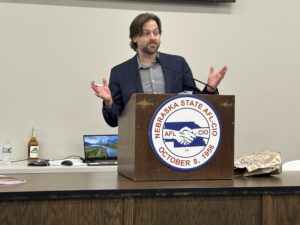 George Dungan
Senator Dungan was born and raised in Lincoln. After graduating from law school, Senator Dungan served as a Lancaster County Deputy Public Defender. Senator Dungan has been very active in his northeast Lincoln community, and has always been a champion for the working class.
During his first term in the legislature, Senator Dungan was always there to support workers and state employees. He led the fight against lowering the minimum wage, removing protection for gig workers, and the reduction of workers comp benefits for workers. He has focused on passing legislation to expand healthier care access and to lower the cost of healthcare.
Senator Dungan has always stood with frontline state employees, and because of his strong voting record, he has earned our endorsement for a second term.
Tobias Howard
Tobias Howard did not respond to our invitation to be interviewed.
Legislative District 28
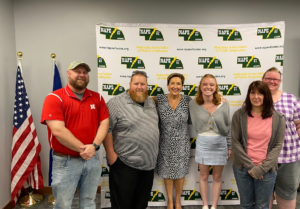 Patty Pansing Brooks
Senator Pansing Brooks is a familiar face to members of our union having served as State Senator for LD28 from 2015-2022 when she was term-limited from seeking re-election. Senator Pansing Brooks was also a candidate for US Congress. A lifelong Nebraskan, Senator Pansing Brooks has been engaged in civic life for decades. She believes that politics should serve people. She believes in compassion, integrity, collaboration, and hope.
In her two terms in the legislature, Senator Pansing Brooks was a strong advocate for frontline workers and state employees. She fought to reform our juvenile justice system, supported budgets to increase state employee wages, and was an advocate for youth in state custody. She strongly supports our right to collectively bargain, and she knows that state employees provide vital services to our neighbors.
Because of her strong voting record and support of state employees, Senator Pansing Brooks has won our endorsement.
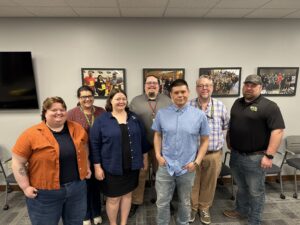 Colby Woodson
Colby is a lifelong Lincolnite and thinks that politics is part of our municipal culture. He currently works at the Nebraska DMV as a temporary driver licensing examiner. Colby is running for the Unicameral because he thinks that current senators are playing politics instead of doing their job of legislating.
Colby feels the most important issue facing Nebraskans today is our housing shortage. He says that includes workforce housing, age appropriate housing for retirees, and even apartments for young adults.
Colby supports the right of state employees to unionize and collectively bargain the terms and conditions of our employment. He believes the value of workers should be elevated and that unions can help in good governance.
Regarding the state budget, Colby stated that the income taxes that were passed by the legislature have become problematic. He believes that we ultimately need to delay the implementation of those income tax cuts in order to balance the state budget.
Colby thinks that there must be regulation over AI and that human oversight must be mandated. We cannot automate everything, especially decisions that ultimately affect people’s lives.
Colby does not have a strong opinion on whether committee chairs in the legislature should be elected by secret ballot or public vote and or whether the current filibuster rules should be changed.
Legislative District 30
Janet Bock
Janet is a lifelong Nebraskan, and has spent most of her life in southeast Nebraska. Janet is a nurse practitioner and served for 12 years on the Tri-County Public Schools Board of Education.
Janet is running for legislature because she wants to make sure that democracy thrives and the rule of law is followed. She feels the current legislature has ignored the will of the voters on certain issues.
Janet feels the most important issue facing Nebraskans today is that their voice be heard. She wants to focus on health care, agriculture, and education in the Unicameral. She cares deeply about public schools and healthcare, and she grew up on, and now runs, her family farm.
In order to balance the state budget, Janet feels that we must look at reasonable cuts for efficiency, but we must grow our tax base, and consider taxing untaxed services and certain goods like cigarettes.
Janet absolutely supports the right of state employees to unionize and collectively bargain. She was a rules covered employee at BSDC in Beatrice, and she saw first hand how important it is for frontline employees to have a voice in their working conditions.
Janet believes that AI should be regulated and that there should be human oversight of all decisions.
Janet stated that committee chairs should continue to be elected by secret ballot to ensure the best candidate is selected. Regarding the filibuster, Janet said she believes it is an important tool in the Unicameral, but she is open to some changes if they make sense.
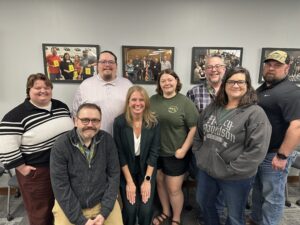 Cally Ideus
Cally is the mother of five boys, a combat veteran, and a medicaid/medicare insurance consultant with years of experience focused on healthcare policy. Cally is running for legislature because she feels that she has the life experience to listen to all constituents and solve complex problems. She feels that she has the skills to listen to experts and craft solutions that benefit all Nebraskans.
Cally thinks the most important issue facing Nebraskans today is that we struggle to communicate effectively. Cally sees her candidacy as a solution to bring all sides to the table in order to actually solve our problems together, instead of deeply entrenching ourselves into different teams.
Regarding the right of state employees to unionize and collectively bargain, Cally stated that she respects unions because they are a group of people who fight for better outcomes. She said she is 100% behind unions, except when they over play their hands. She feels we should work together for common solutions.
To balance the state budget, Cally jokingly said she, “says no a lot.” In reality she feels that we need to do a deep forensic look to determine where the structural issues are with the budget and balance the budget based on those results.
Cally believes that AI is a tool with great potential, but we must have human oversight of the technology at all times.
Cally believes that committee chairs in the legislature should be elected by public vote and thinks the filibuster rules need to be changed, but does not know exactly how.
Legislative District 32
Mark Schoenrock
Mark is a Jefferson County Commissioner who was born and raised in the county. He was raised on the values of hard work, discipline, and integrity. He was nominated to attend West Point. In addition to serving as an Army officer and completing 17 moves in the army, Mark has an Agriculture degree from the University of Nebraska-Lincoln.
Mark is running for the Nebraska Legislature because he has the experience of having served as a Jefferson County Commissioner, and being voted county official of the year by the Nebraska Association of County Officials, to make a difference to improve the lives of all Nebraskans.
Mark feels the most important issue facing Nebraskans today is our tax structure. Having passed 11 budgets in his time on the Jefferson County Board, Mark has learned that everyone wants services, but nobody wants to pay for them.
Mark said he absolutely supports the right of state employees to unionize and collectively bargain, and he has had good experiences negotiating contracts with the IBEW and FOP on behalf of Jefferson County. Mark says we have a mutual objective in contract negotiations to best serve Nebraskans.
Regarding the state budget, Mark wants to sit down with Senator Dorn over the summer and really learn the intricacies of the state budget. Mark said his experience with the county’s budget will help him craft solutions. He thinks we need to broaden our revenue base, but does not support a strict consumption tax such as the EPIC option. Mark also shared that he would not forget state employees during tough budget times because we have to have dedicated employees to do the work of the state.
Mark thinks that committee chairs in the legislature should be elected by public vote to ensure transparency. Mark feels that the filibuster is important so the minority voice is heard and he does not plan to advocate for changes to the rule, but if elected would evaluate that issue more.
 Shaylene Smith
Shay grew up in Paxton, Nebraska. She attended Doane College and never left Crete after that. Shay is an attorney who graduated from the University of Nebraska-Lincoln College of Law. In addition to her law practice, Shay has been involved heavily in community development in Saline County including the swimming pool and theatre in Crete.
Shay is running for legislature because she loves to give back and she is great at building bridges. Shay is not a member of a political party and feels that she can provide rational middle of the road common sense in the legislature. Her law and tax background uniquely qualifies her to be successful as a senator.
Shay believes that the most important issue facing Nebraskans is the rising cost of living. She sees a lack of bipartisanship as a close second. She thinks we must work together to find common sense solutions to lower the cost of living.
Shay said she absolutely supports the right of Nebraska state employees to unionize and collectively bargain the terms and conditions of our employment.
To balance the state budget, Shay says we must strategically plan long term. Too often, she says, the legislature focuses on short term projects, instead of finding long term solutions to fund property tax relief. In order to do so, she feels we need to have a long term plan to change the way we pay for education, medical care, child care, and support our families.
Shay says that AI must be used safely and responsibly and that includes having human oversight of decisions. She does not believe that AI should take over certain functions, for example, autonomous vehicles.
Shay thinks that the current secret ballot method of electing committee chairs in the legislature may make some people more comfortable with electing the best candidate, and she says that is the most important thing in selecting committee chairs. Shay thinks the filibuster rules should remain in place because they add safety bumpers, kind of like in bowling.
Legislative District 34
 Ben Blodgett
Ben was born and raised in Central City. He has always worked in the trades, and he has been a member of IBEW Local 265 for almost 10 years. Ben is running for the legislature to be an actual voice for the people in his district instead of a party line politician.
As a union electrician, Ben supports the right of state employees to unionize and collectively bargain the terms and conditions of our employment. Ben stated that we can count on him for support on labor related issues, including those before the CIR.
Ben thinks that there must be guardrails enacted through laws and regulations to ensure that AI use does not displace or otherwise harm workers.
Ben thinks that committee chairs in the legislature should be elected by public vote because he is an open book. He wasn’t sure yet his stance on whether the current filibuster rules should be changed.
Senator Loren Lippincott
Senator Lippincott did not respond to our invitation to be interviewed.
Legislative District 36
 Senator Rick Holdcroft
Senator Rick Holdcroft spent 28 years in the US Navy, including time at the command of a ship. Senator Holdcroft went into politics after his retirement because to him, it’s really about service. Service runs in his family and he is running for re-election to continue to serve the people of his district. Senator Holdcroft is currently the chairperson of the General Affairs Committee.
Senator Holdcroft said that up until a few months ago he thought the most important issue facing Nebraskans was high property taxes, but now it’s clearly affordability. He stated it’s tougher for the Unicameral to control inflation and prices, but he said we must do all that we can to lower prices for Nebraskans.
Senator Holdcroft stated that he thinks unions are important in order to give workers a voice. He thinks it’s important to have health and safety standards, and unions can advocate for those. He absolutely supports the right of state employees to unionize and collectively bargain the terms and conditions of their employment.
Senator Holdcroft said that the state budget has a deficit not because of spending, but because of a hole that was developed by state income tax reductions. State spending is actually down, but so is our revenue. Senator Holdcroft thinks we can use the rainy day fund to weather this storm, and after a few years the budget will recover on its own because the revenue shortfall will even out.
Senator Holdcroft believes it is common sense to have human oversight of AI. He stated that we must be careful with AI, and even though he has a masters degree in computer science, he understands that, “nothing replaces the man in the cockpit or the soldier on the field to make the final decision.”
Senator Holdcroft believes that committee chairs should be elected publicly, and he supports the current filibuster rules. He thinks that 2023 was an anomaly and believes that Speaker Arch has done a good job in preserving our Unicameral as an institution.
 Darin Tompkins
Darin spent three decades in science and manufacturing and has degrees in biology and microbiology. He has lived in Nebraska for 27 years and has deep roots in the community.
Darin was motivated to run for Nebraska legislature because he feels the current legislature has ignored the will of the voters in overturning ballot initiatives.
Darin thinks the most important issue facing Nebraskans today is affordability. He has six children, and their ability to get started in life, compared to his, has been much more challenging. He wants to find ways to lower costs in order to give the next generation a chance to be successful in Nebraska.
Darin supports the right of Nebraska state employees to unionize and collectively bargain the terms and conditions of their employment. He thinks it is important for workers to have their voice heard and advocate for better pay and benefits. He said he strongly believes in the power of a union.
To fix the state’s budget shortfall, Darin says that we have to grow our economy. It’s important when giving business incentives that legislators ensure there is accountability for those incentives and that they support our state.
Darin believes that AI needs to be regulated and that human oversight is important in making decisions, especially in the determination of benefits.
Darin believes that committee chairs in the legislature should be selected by secret ballot to ensure the best person is elected and it is not a political loyalty test. He also believes that the filibuster should remain unchanged so that senators are required to have discussion and compromise.
Legislative District 38
Tim Anderson
Tim Anderson did not attend his interview with the NAPE/AFSCME Government Affairs Committee.
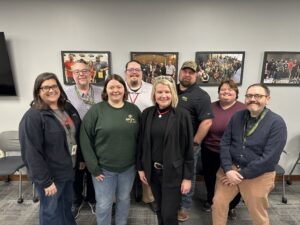 Janell Anderson Ehrke
Janell is the founder and CEO of GROW Nebraska which is based at the Younes Center in Kearney. GROW is a non-profit that helps small businesses thrive in Nebraska. She and her husband also run their family farm near Orleans.
Janell is running for legislature because ugly rhetoric needs to stop and we have to focus on growing our state. Janell is uniquely positioned because of her professional experience at GROW Nebraska and deep roots in agriculture. She states she knows that encouraging small business growth will jump start our state. She is also adamant that the legislature must not overturn the will of the voters.
Janell said the most important issue facing Nebraskans today is property taxes. We have to run the state like a business and find solutions to the property tax burden while broadening our tax base in order to fund services like schools. She said we must create income opportunities, and then government should get out of the way.
Janell said she absolutely supports the right of state employees to unionize and collectively bargain the terms and conditions of their employment. She said that, “State employees are the backbone of our state.” When everyone is at the table, Janell said we can solve problems together.
Janell said AI is a tool that should be used to support employees, but should never displace employees. She also believes that AI needs human oversight.
Janell believes that committee chairs in the legislature should be elected by public vote, but must also be based on selecting the most competent senator for the job. Janell does not have a strong opinion on the filibuster, but thinks it would be more efficient to limit the number of bills each senator can introduce.
Janell earned our endorsement because of her focus on growing Nebraska, support of our collective bargaining rights, and her desire to ensure vital services are funded. She also showed clear support to listen to all stakeholders and bring Nebraskans together.
Legislative District 40
Legislative District 41 (Special Election)
Legislative District 42
Legislative District 44
Legislative District 46
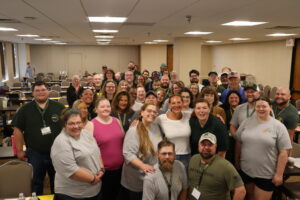 Senator Danielle Conrad
Originally from Seward, Nebraska, Senator Conrad is a civil rights attorney who is currently the longest serving senator in the Unicameral. She was first elected in 2006 and reelected in 2010 and 2022. She is seeking another term in the Nebraska legislature to continue to advance a “Working Families” agenda.
There are few candidates who have the experience of Senator Conrad. She has a 100% voting record on issues that have affected our union members. In 2011 she protected our right to collectively bargain. She has led the fight to protect paid sick leave, minimum wage, and protections for gig workers. In short, Senator Conrad has been a champion for NAPE/AFSCME members for 12 years in the Unicameral.
Senator Conrad has earned our endorsement because she has the experience and the ability to advocate for frontline workers in the Unicameral. NAPE/AFSCME members have an important advocate in Senator Conrad.